GridGain Platform
Processing for Transactional
and Analytical Workloads
transactional, stream, and analytical processing at massive scale.
Ultra-Fast
Distributed memory-first architecture and colocated compute enable data processing and analytics at low-millisecond latencies
Infinitely Scalable
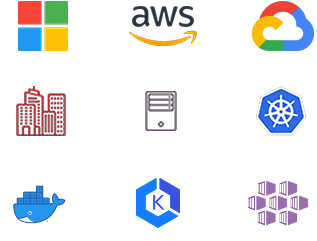
Horizontally scalable clusters can be deployed both on-premises and natively in public or private clouds
Flexible and Durable
Multi-model support including ANSI SQL and full ACID compliance, and configurable disk-based persistence for added durability
All Relevant Data
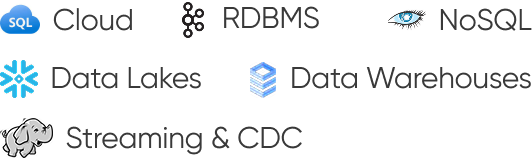
Involve streaming, historical, transactional, and analytical data, as well as all data types and formats, for the most accurate, real-time decisions
GridGain Platform At-A-Glance
- Unifies
- Transaction Processing
- Advanced Analytics
- AI / ML Operations
- Data Hub
- System of Record
- Stream Processing
- Manages data at-rest and data in-motion
- Combines historical, transactional and analytical data in real time
- Provides ACID compliance and durable system-of-record capabilities
- Executes complex workloads with ultra-low latencies
- Supports AI/ML operations
Key Capabilities
How We Do It
It enables a simplified and optimized data architecture for enterprises that require extreme speed, massive scale, and high availability from their data ecosystem.

Distributed Processing
GridGain's distributed architecture offers massive scalability to petabytes of in-memory data.
All workload is distributed across a horizontally scalable cluster on-premises or in the cloud, providing high availability, scalability, and strong data consistency.
Processing data in-memory eliminates back and forth with disk, resulting in ultra-low latencies.
Memory-Centric Storage
GridGain's flexible memory-first, disk-second architecture minimizes disk I/O to provide ultra-low latencies across transactional, streaming, and analytical processing.
GridGain can be deployed as a distributed hybrid-memory database with up to 100% of data stored in-memory, and 100% stored on-disk.
This architecture also ensures that data is immediately available upon restart.


Colocated Compute
GridGain allows you to run your compute code, complex workloads, and application logic where your data is.
All computing is colocated and processed in the same memory space as your data.
This avoids any overhead of data movement over the network and enables massively parallel processing.
"By using GridGain's in-memory computing platform, we have been able to reduce our pricing strategy computations from many seconds to milli-seconds. We have scaled out our computing platform across all geographies within AMERA (Asean, Middle East, Russia and Africa) to centrally manage our pricing & promotions engine and provide real-time promotional pricing to our customers within our region."

GridGain in MariaDB Enterprise Platform
| GridGain Capability | Apache Ignite |
MariaDB Enterprise Platform |
MariaDB Enterprise Platform Plus |
MariaDB Enterprise Platform Ultimate |
|---|---|---|---|---|
| Distributed Data Store | Yes |
Yes |
Yes |
Yes |
| In-Memory and Persistent Storage | Yes |
Yes |
Yes |
Yes |
| NoSQL APIs | Yes |
Yes |
Yes |
Yes |
| ANSI SQL | Yes |
Yes with SQL Memory Management |
Yes with SQL Memory Management |
Yes with SQL Memory Management |
| Transactions | Yes |
Yes |
Yes |
Yes |
| Stream Processing | Yes |
Yes |
Yes |
Yes |
| Distributed Compute | Yes |
Yes |
Yes |
Yes |
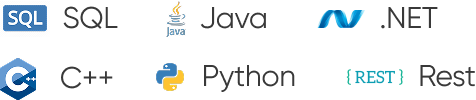
| Polyglot Clients Java, .NET, C++, Python, JDBC, ODBC, REST, CLI |
Yes |
Yes |
Yes |
Yes |
| 3rd Party Persistence | Yes |
Yes |
Yes |
Yes |
| Data Expiry and Eviction | Yes |
Yes |
Yes |
Yes |
| Encryption at-rest | Yes |
Yes |
Yes |
Yes |
| Support | Yes |
Yes |
Yes |
|
| Multi-tenancy | Yes |
Yes |
Yes |
|
| Batch and Streaming Integrations Kafka, Iceberg, Parquet, CSV |
Yes |
Yes |
Yes |
|
| Rolling Upgrade | Yes |
Yes |
Yes |
|
| Enterprise-Grade Security | Yes |
Yes |
Yes |
|
| Vector Search | Yes |
Yes |
Yes |
|
| Control Center | Yes |
Yes |
Yes |
|
| Kubernetes Operator | Yes |
Yes |
||
| Data Center Replication | Yes |
|||
| Rack Awareness | Yes |
|||
| Full and Incremental Snapshots | Yes |
Yes Non-Intrusive Snapshot Creation |
||
| Remote Snapshots & Heterogeneous Restore | Yes |
|||
| Point-in-Time Recovery | Yes |
|||
| z/OS support | Yes |
Get started today
GridGain Platform
A complete, enterprise-grade solution for workloads in your on-prem and private cloud environments.
Try for freeHave more questions?